Droven.io RPA and Business Automation
Droven.io RPA and Business Automation: Transforming Modern Business Operations

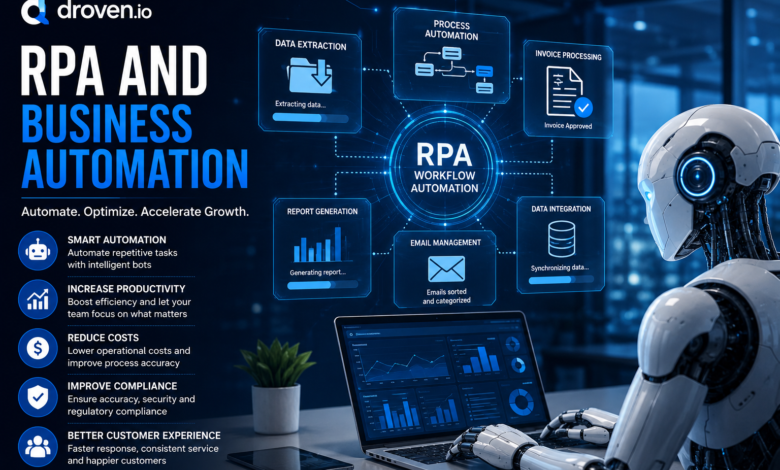
Droven.io RPA and Business Automation: Transforming Modern Business Operations
In today’s fast-paced digital economy, businesses are constantly searching for ways to improve efficiency, reduce operational costs, and enhance productivity. As organizations grow, managing repetitive tasks manually becomes increasingly challenging. This is where Robotic Process Automation (RPA) and business automation technologies come into play. Among the emerging solutions in this space, Droven.io has gained attention for helping organizations automate workflows, streamline operations, and support digital transformation initiatives.
Business automation is no longer a luxury reserved for large enterprises. Small and medium-sized businesses are also embracing automation to remain competitive in an evolving marketplace. By combining intelligent software tools with automated workflows, companies can reduce human error, save valuable time, and focus on strategic growth initiatives.
Understanding RPA and Business Automation
Robotic Process Automation, commonly known as RPA, involves the use of software robots or “bots” to perform repetitive, rule-based tasks that would otherwise require human intervention. These tasks may include data entry, invoice processing, customer onboarding, report generation, email management, and more.
Business automation extends beyond RPA by connecting systems, applications, and workflows across an organization. It creates a digital ecosystem where processes run smoothly with minimal manual effort. Instead of employees spending hours on repetitive administrative work, automation enables them to concentrate on innovation, customer service, and decision-making.
Droven.io focuses on enabling organizations to leverage these technologies to improve operational performance while maintaining flexibility and scalability.
Why Businesses Need Automation
Modern organizations face several challenges, including rising operational costs, increasing customer expectations, and growing competition. Manual processes often lead to delays, inconsistencies, and unnecessary expenses.
Business automation addresses these challenges by providing:
- Faster task completion
- Improved accuracy
- Reduced operational costs
- Enhanced compliance
- Better customer experiences
- Increased employee productivity
Companies that adopt automation technologies often discover opportunities to optimize workflows that were previously overlooked. This creates a foundation for long-term growth and sustainable success.
How Droven.io Supports Business Automation
Droven.io provides solutions designed to help businesses automate repetitive processes and improve workflow efficiency. Rather than replacing employees, automation tools work alongside human teams to eliminate routine tasks and reduce administrative burdens.
Organizations can utilize automation to manage various business functions, including:
Data Processing
Many companies handle large volumes of information daily. Entering information manually often requires significant time and can lead to mistakes that affect overall efficiency. Automated systems can collect, organize, and process data quickly and accurately, improving overall operational efficiency.
Customer Service Operations
Automation can assist customer support teams by managing common inquiries, routing requests, generating responses, and updating customer records. This allows support staff to focus on more complex issues that require human expertise.
Financial Management
Finance departments often spend significant time processing invoices, reconciling accounts, and generating reports. Automated workflows can accelerate these processes while maintaining compliance and accuracy.
Human Resources Management
HR teams can automate employee onboarding, document management, leave requests, payroll-related processes, and performance tracking. This reduces administrative workload and improves employee experiences.
Supply Chain Coordination
Automation helps businesses monitor inventory, track shipments, manage procurement processes, and generate real-time updates. As a result, organizations can improve visibility and reduce operational bottlenecks.
Key Benefits of Droven.io RPA Solutions
Increased Productivity
One of the primary advantages of automation is productivity improvement. Software robots can operate continuously without breaks, allowing tasks to be completed faster than traditional manual methods.
Reduced Human Error
Manual processes often introduce mistakes that can lead to financial losses or customer dissatisfaction. Automation follows predefined rules and procedures, significantly reducing the risk of errors.
Cost Savings
Businesses can lower operational expenses by automating repetitive tasks. Reduced processing time, fewer errors, and improved resource allocation contribute to long-term cost efficiency.
Scalability
As organizations grow, workloads increase. Automation solutions allow businesses to handle larger volumes of work without proportional increases in staffing requirements.
Better Compliance
Many industries operate under strict regulatory requirements. Automated systems can maintain detailed records, track activities, and ensure processes follow established compliance standards.
Enhanced Customer Experience
Customers expect fast and reliable service. Automated workflows can shorten response times, improve service consistency, and create more satisfying customer interactions.
The Role of Automation in Digital Transformation
Digital transformation has become a priority for organizations worldwide. Businesses are investing in technology to modernize operations and adapt to changing market conditions.
Automation serves as a critical component of digital transformation because it helps organizations:
- Eliminate outdated manual processes
- Improve operational agility
- Increase data visibility
- Support informed decision-making
- Accelerate innovation
Droven.io’s approach to business automation aligns with these objectives by helping organizations build more efficient and resilient operational frameworks.
Industries Benefiting from RPA and Automation
Businesses in various sectors are increasingly implementing automation solutions to improve productivity and streamline operations.
Healthcare
Healthcare providers use automation to manage patient records, appointment scheduling, billing, and administrative processes. This allows medical professionals to dedicate more time to patient care.
Banking and Financial Services
Financial institutions automate compliance checks, loan processing, customer onboarding, and transaction monitoring to improve efficiency and reduce risks.
Manufacturing
Manufacturers use automation to optimize production planning, inventory management, quality control, and supply chain operations.
Retail and E-Commerce
Retail businesses automate order processing, inventory updates, customer support, and marketing activities to enhance customer experiences and improve operational performance.
Professional Services
Consulting firms, legal practices, and service providers use automation to manage documents, client communications, reporting, and administrative tasks.
Future Trends in Business Automation
The future of business automation continues to evolve rapidly. Emerging technologies such as artificial intelligence, machine learning, predictive analytics, and intelligent document processing are expanding the capabilities of automation platforms.
Future automation solutions may offer:
- Advanced decision-making support
- Predictive business insights
- Intelligent workflow optimization
- Enhanced customer personalization
- Greater integration across digital systems
As these technologies mature, businesses will have even more opportunities to improve efficiency and create competitive advantages.
Challenges to Consider
While automation offers significant benefits, successful implementation requires careful planning. Organizations should evaluate existing workflows, identify automation opportunities, and establish clear objectives before deployment.
Common challenges include:
- Resistance to change
- Integration complexities
- Employee training requirements
- Process standardization needs
Businesses that address these challenges proactively are more likely to achieve successful automation outcomes.
Conclusion
Droven.io RPA and business automation solutions represent a modern approach to improving operational efficiency and supporting digital transformation. By automating repetitive tasks, streamlining workflows, and reducing manual effort, organizations can enhance productivity, lower costs, and deliver better customer experiences.
As technology continues to advance, automation will become an increasingly important component of business success. Companies that embrace innovative automation strategies today will be better positioned to adapt, compete, and thrive in the future. Whether an organization seeks to improve internal processes, optimize customer service, or accelerate growth, RPA and business automation provide a powerful foundation for long-term success.