Ursa Major Stratolaunch Hypersonic Technology
Ursa Major Stratolaunch Hypersonic Technology: Advancing the Future of High-Speed Flight

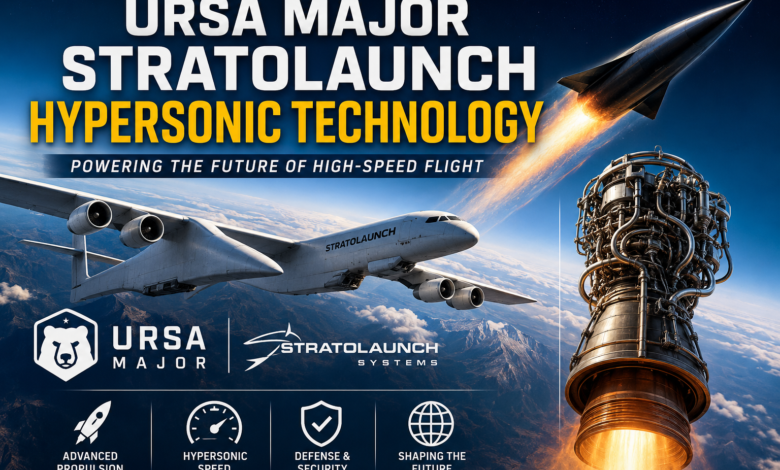
Ursa Major Stratolaunch Hypersonic Technology: Advancing the Future of High-Speed Flight
The race to develop hypersonic technology has become one of the most significant developments in modern aerospace engineering. Nations, private companies, and defense organizations around the world are investing heavily in systems capable of traveling at speeds exceeding Mach 5, or five times the speed of sound. Among the organizations leading this technological transformation are Ursa Major and Stratolaunch, two innovative American aerospace companies working together to push the boundaries of high-speed flight.
Their collaboration represents a major step toward creating more reliable, affordable, and effective hypersonic testing platforms. As demand for advanced aerospace systems grows, the partnership between Ursa Major and Stratolaunch is attracting attention from industry experts, military planners, and technology enthusiasts alike.
Understanding Hypersonic Technology
Hypersonic technology refers to aircraft, missiles, and vehicles capable of traveling at speeds greater than Mach 5. At these extreme velocities, traditional aerodynamic principles change significantly. Airflow around the vehicle becomes highly compressed, temperatures rise dramatically, and engineering challenges become far more complex.
Hypersonic systems offer several advantages:
- Faster travel times
- Improved military response capabilities
- Advanced scientific research opportunities
- Enhanced space access technologies
- Greater strategic flexibility
However, developing hypersonic vehicles requires sophisticated propulsion systems, heat-resistant materials, and extensive testing capabilities.
Who Is Ursa Major?
Ursa Major is a private aerospace company specializing in advanced rocket propulsion systems. Founded with the goal of providing affordable and scalable rocket engines, the company has quickly established itself as a key player in the aerospace sector.
The company focuses on designing and manufacturing high-performance propulsion systems that support defense, commercial space, and hypersonic applications. Unlike traditional aerospace contractors that often require years to develop new engines, Ursa Major emphasizes rapid development cycles and modern manufacturing techniques.
Its innovative approach has enabled the company to produce reliable propulsion systems while reducing costs and development timelines.
Ursa Major’s Core Strengths
Several factors distinguish Ursa Major from traditional aerospace manufacturers:
- Advanced liquid rocket engines
- Modern manufacturing methods
- Rapid testing and development
- Cost-efficient production
- Flexible propulsion solutions
These strengths make the company an attractive partner for organizations seeking next-generation flight technologies.
What Is Stratolaunch?
Stratolaunch is an aerospace company known for developing one of the largest aircraft ever built. The company was originally created to provide innovative methods for launching payloads into space, but its focus has expanded significantly over time.
Today, Stratolaunch plays an important role in hypersonic flight testing. The company operates unique air-launch systems that enable experimental vehicles to be released at high altitudes before accelerating to hypersonic speeds.
Its giant carrier aircraft provides a flexible and cost-effective platform for testing advanced aerospace technologies without relying entirely on traditional ground-based launch systems.
The Importance of Hypersonic Testing
Developing hypersonic vehicles requires extensive testing under real-world conditions. Engineers must evaluate:
- Aerodynamic performance
- Structural integrity
- Heat resistance
- Guidance systems
- Propulsion efficiency
- Flight stability
Ground testing can provide valuable data, but actual flight testing remains essential. Real-world conditions often reveal challenges that cannot be fully replicated in laboratories.
This is where Stratolaunch’s airborne testing platform becomes extremely valuable. By launching test vehicles from high altitude, engineers can gather critical performance data while reducing overall testing costs.
The Ursa Major and Stratolaunch Partnership
The collaboration between Ursa Major and Stratolaunch focuses on integrating advanced propulsion technology into hypersonic test vehicles.
Ursa Major supplies high-performance rocket engines designed to support demanding flight conditions. Stratolaunch provides the launch platform and testing environment needed to evaluate those systems during actual missions.
Together, the companies create a complete ecosystem for hypersonic research and development.
This partnership helps accelerate innovation by combining expertise in propulsion engineering with advanced flight-testing infrastructure.
Advanced Rocket Engine Technology
One of the most important aspects of the partnership involves propulsion systems capable of operating in extreme environments.
Hypersonic vehicles require engines that can deliver:
- High thrust levels
- Consistent performance
- Operational reliability
- Efficient fuel consumption
- Durability under intense thermal stress
Ursa Major develops advanced rocket propulsion systems specifically engineered to perform reliably under the extreme conditions required for hypersonic flight. Through advanced engineering and extensive testing, the company has developed propulsion systems capable of supporting next-generation aerospace programs.
Modern manufacturing methods such as additive manufacturing, commonly known as 3D printing, also help reduce production costs while improving design flexibility.
Why Hypersonic Technology Matters
The development of hypersonic systems could transform multiple industries.
National Defense
Military organizations view hypersonic technology as a strategic capability. Faster vehicles can improve response times and provide greater operational flexibility.
Scientific Research
Researchers can use hypersonic platforms to study atmospheric conditions, material performance, and advanced flight dynamics.
Commercial Applications
Although still in the early stages, hypersonic technology may eventually support ultra-fast transportation systems capable of dramatically reducing travel times between continents.
Space Exploration
Many technologies developed for hypersonic vehicles can contribute to future launch systems and space missions.
Challenges Facing Hypersonic Development
Despite rapid progress, significant obstacles remain.
Extreme Heat
At hypersonic speeds, friction generates tremendous heat. Vehicle surfaces may reach temperatures capable of damaging conventional materials.
Complex Aerodynamics
Air behaves differently at extreme velocities, creating unique engineering challenges that require advanced computational modeling and testing.
High Development Costs
Research, testing, and manufacturing remain expensive, making collaboration essential for reducing costs.
Testing Limitations
Real-world testing opportunities are limited, which increases the importance of platforms such as those developed by Stratolaunch.
The Future of High-Speed Flight
Industry experts believe hypersonic technology will continue to advance rapidly over the coming decade. Investments from governments, defense agencies, and private companies are accelerating research efforts worldwide.
The partnership between Ursa Major and Stratolaunch demonstrates how collaboration can help overcome technical challenges and speed up innovation.
As propulsion systems become more powerful and testing capabilities improve, hypersonic vehicles may move from experimental programs to operational systems. This transition could reshape aerospace engineering, defense strategies, and future transportation concepts.
Conclusion
Ursa Major and Stratolaunch are helping drive the evolution of hypersonic technology through a combination of advanced rocket propulsion and innovative flight-testing capabilities. Their partnership highlights the growing role of private aerospace companies in solving some of the industry’s most complex engineering challenges.
By enabling more efficient hypersonic testing and propulsion development, these organizations are contributing to a future where ultra-fast flight becomes increasingly practical and achievable. As research continues and new breakthroughs emerge, the impact of hypersonic technology is likely to extend far beyond aerospace, influencing defense, transportation, and scientific exploration for years to come.